Maui Mango Mālama Mania: Expert Tips for a Bountiful Harvest
If there is one tree that defines the Maui summer, it’s the Mango. Whether you’re looking for a classic Haden, a buttery Rapoza, or something exotic from the world-famous Gary Zill lineages, growing your own mango is a rite of passage for any Maui homeowner.
But “Mango Mālama” (caring for your mango) requires a bit of island-specific knowledge to get those branches heavy with fruit. Here is your roadmap to growing, picking, and caring for your mango tree on the Valley Isle.
1. Planting for the Long Game
Mangos are fast-growing giants. While they might look cute in a 3-gallon pot, they won’t stay that way for long. In our Maui climate, it generally takes about 1 to 1.5 years to grow a mango from a seed to a healthy 3-gallon size that is ready to be sold or planted in the ground.
Spacing is Key: When you plant, give them room to breathe! Space your trees at least 20 feet apart. Proper spacing ensures good airflow, which is your best defense against moisture-related diseases.
The “Tough Love” Rule: Don’t be intimidated. Mangos are incredibly resilient. One of the biggest secrets to success is knowing that you’re not going to hurt it. They are hardy trees that respond well to proactive care.
2. The Maui Mango Calendar
On Maui, the weather dictates the bloom. If you want a consistent harvest, you need to understand the island’s seasonal cycle:
Flowering Season (December – April): This is the most critical time. Your tree should be covered in flower clusters (panicles) during these months.
Fruiting Season (May – October): The payoff! You’ll start seeing fruit develop as the weather warms.
The Peak: Expect the “Mango Mania” to hit its absolute height on Maui in June and July.
Pro Tip: Is your tree fruiting during the flowering season? Don’t panic. Sometimes a tree gets its signals crossed due to a sudden stress event—like a dry spell followed by heavy rain—or just a quirk of that specific cultivar. Consider it a bonus harvest!
3. Why is my mango not fruiting?
This is the most common question we get. On Maui, the culprit is almost always the weather. If we have a very wet winter during the flowering season (Dec–Apr), a fungus called anthracnose or powdery mildew can attack the blossoms. This causes them to turn black and drop before the fruit can even start to grow.
If your tree looks healthy but isn’t producing, it might also be “alternate bearing”—essentially taking a year off to recover after a massive harvest the year before.
4. Upgrading Your Orchard: Grafting
If you have a mature mango tree that produces “stringy” or less-than-ideal fruit, don’t chop it down! Grafting onto mature trees (top-working) is a game-changer.
By grafting a scion from a premium variety onto your established rootstock, you can “upgrade” your tree. Because the root system is already massive and established, the new variety will grow at an incredible rate compared to a brand-new sapling. You can even graft multiple varieties onto one tree, provided they have a similar growth habit.
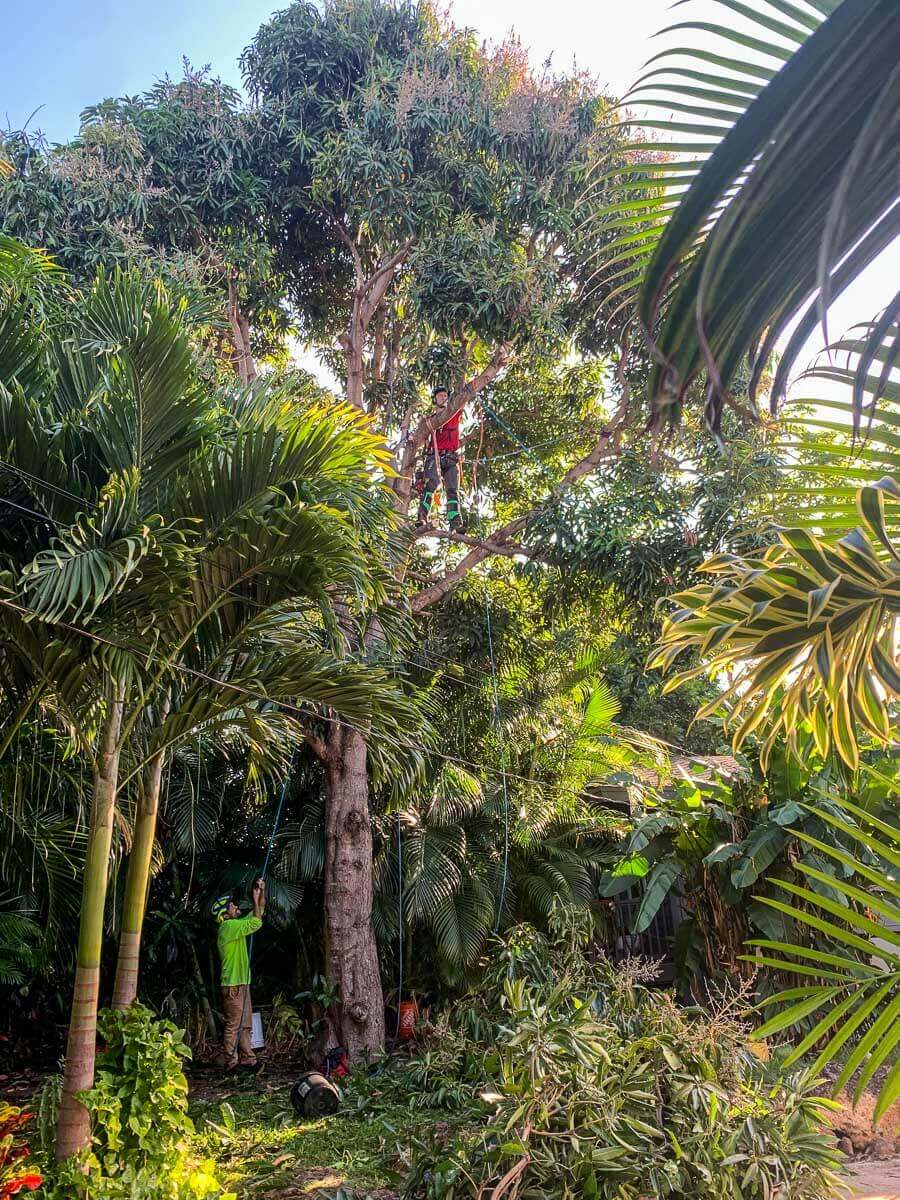
5. Pruning: The Secret to High Yields
Many people are afraid to prune, but for mangos, it is essential. If you let a mango go wild, all the best fruit will be 40 feet in the air where only the birds can reach them.
When to Prune your Mango tree on Maui
Always prune immediately after fruiting.
- The Goal: Pruning opens the canopy to sunlight and airflow. This keeps the tree at a manageable height and encourages the “flushes” of new growth that will become next year’s flower sites.
The Kokua Quick-Start Checklist
Space it out: Plant with 20ft of clearance.
Watch the clock: Look for flowers from December to April.
Harvest time: Celebrate the peak in June and July!
The Post-Fruit Prune: Trim the tree back once the last mango is picked.
Graft for Variety: Upgrade mature trees with premium cultivars.
Need a hand with your Mango Mālama? Whether you need professional pruning, expert grafting, or help choosing the right variety for your specific Maui micro-climate, Kōkua Tree Care is here to help your orchard thrive.
Call Us Today